
Red Arrows To Fly As Seven-Ship For Displays As Hawk T1 Fleet Nears Retirement
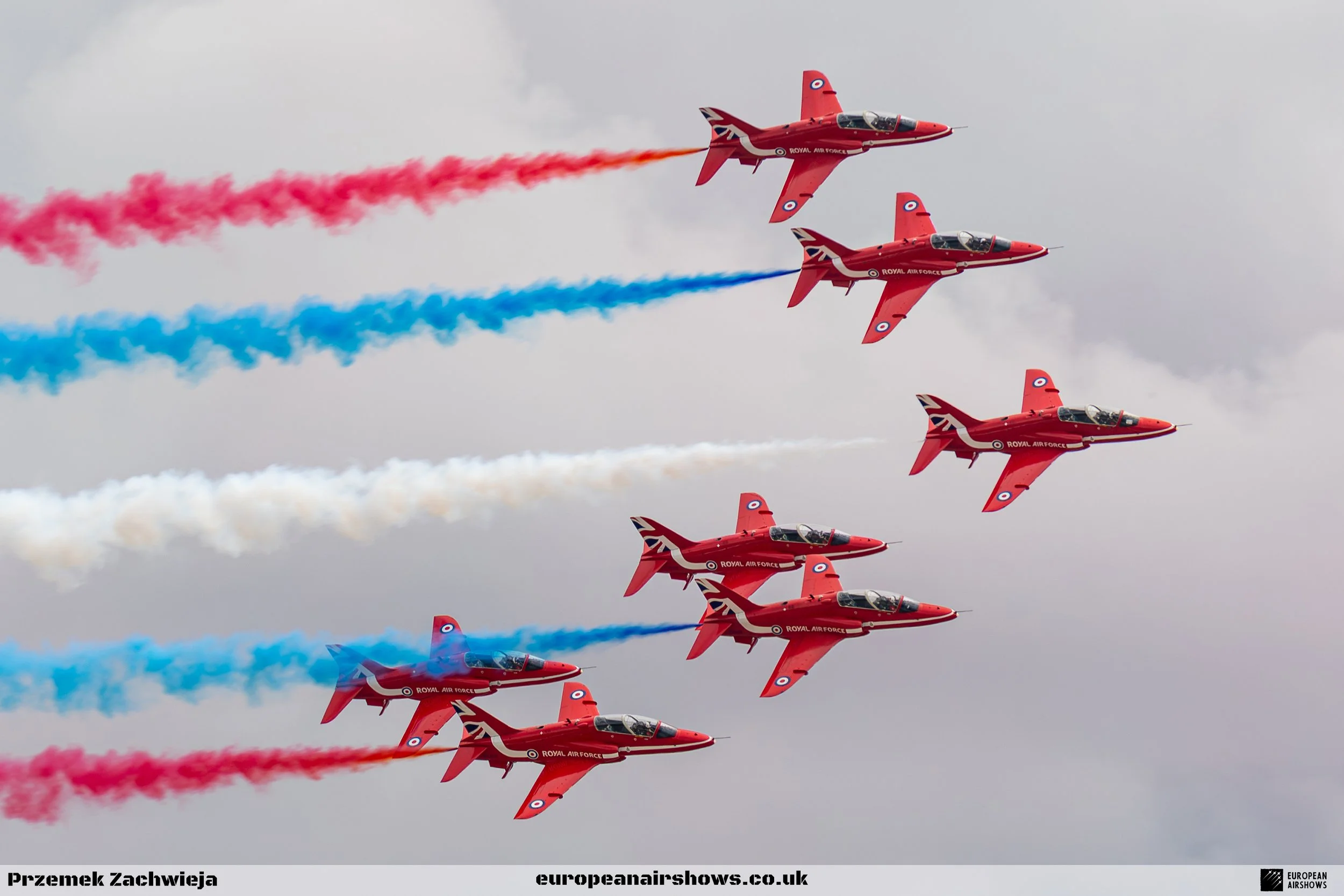
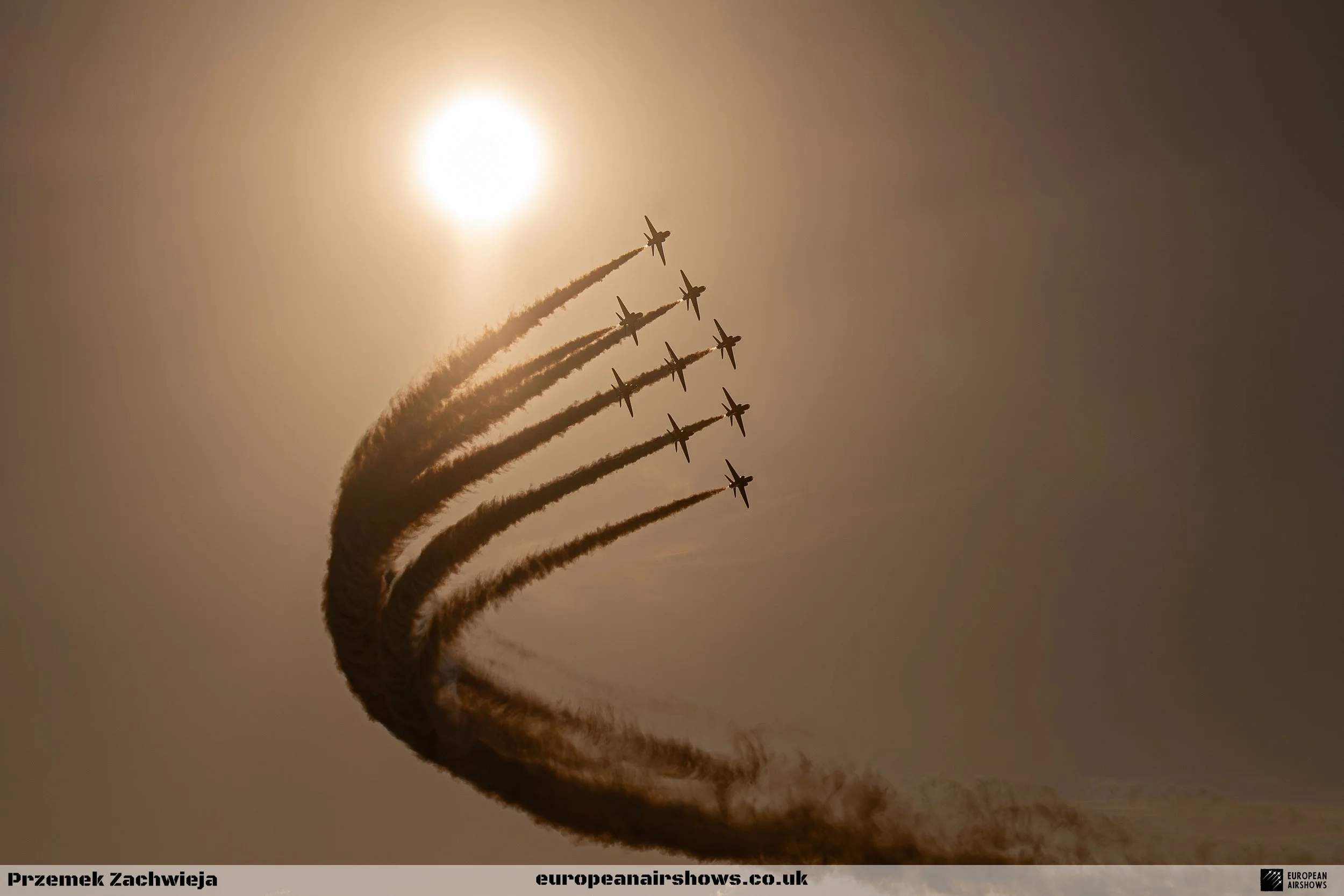
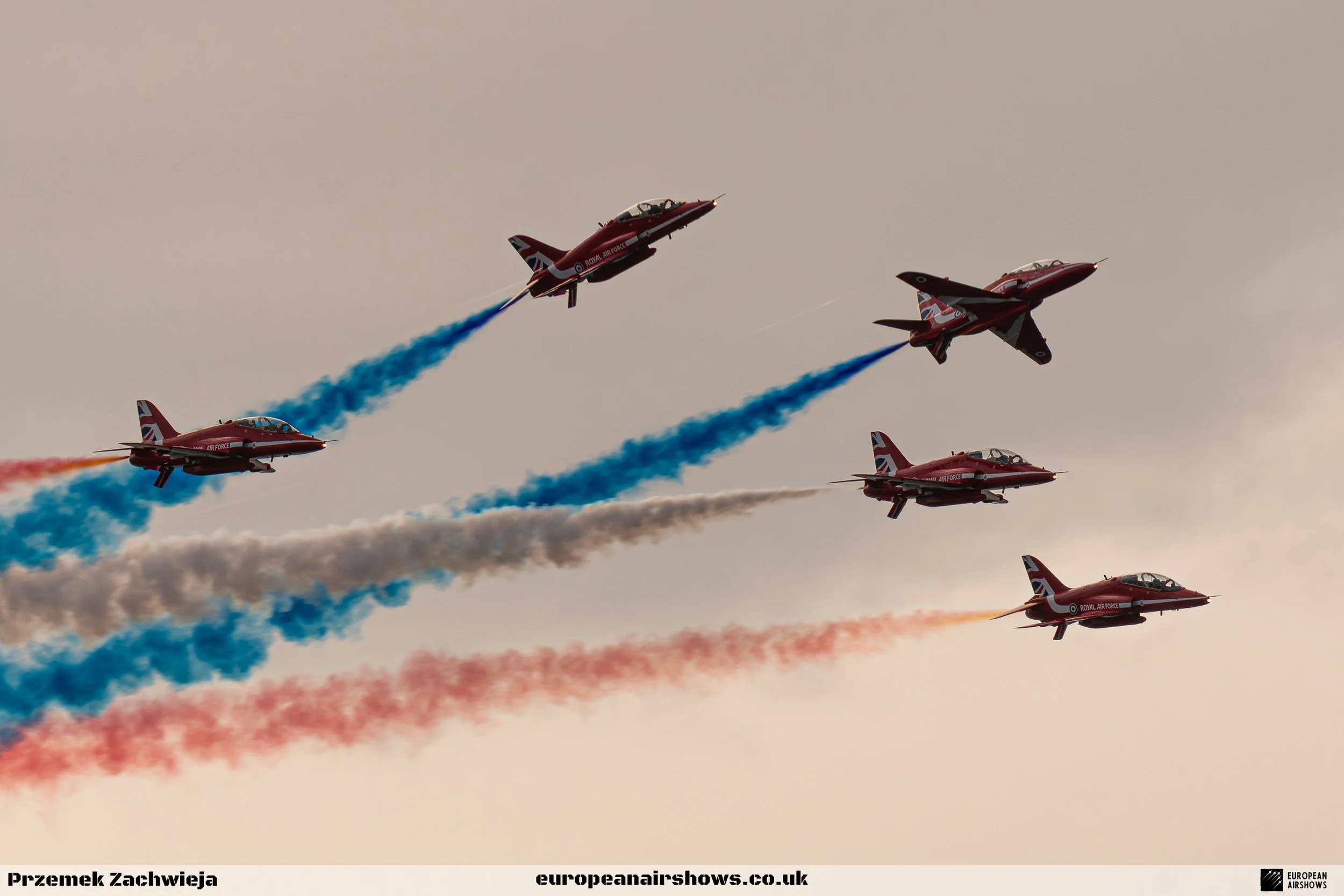
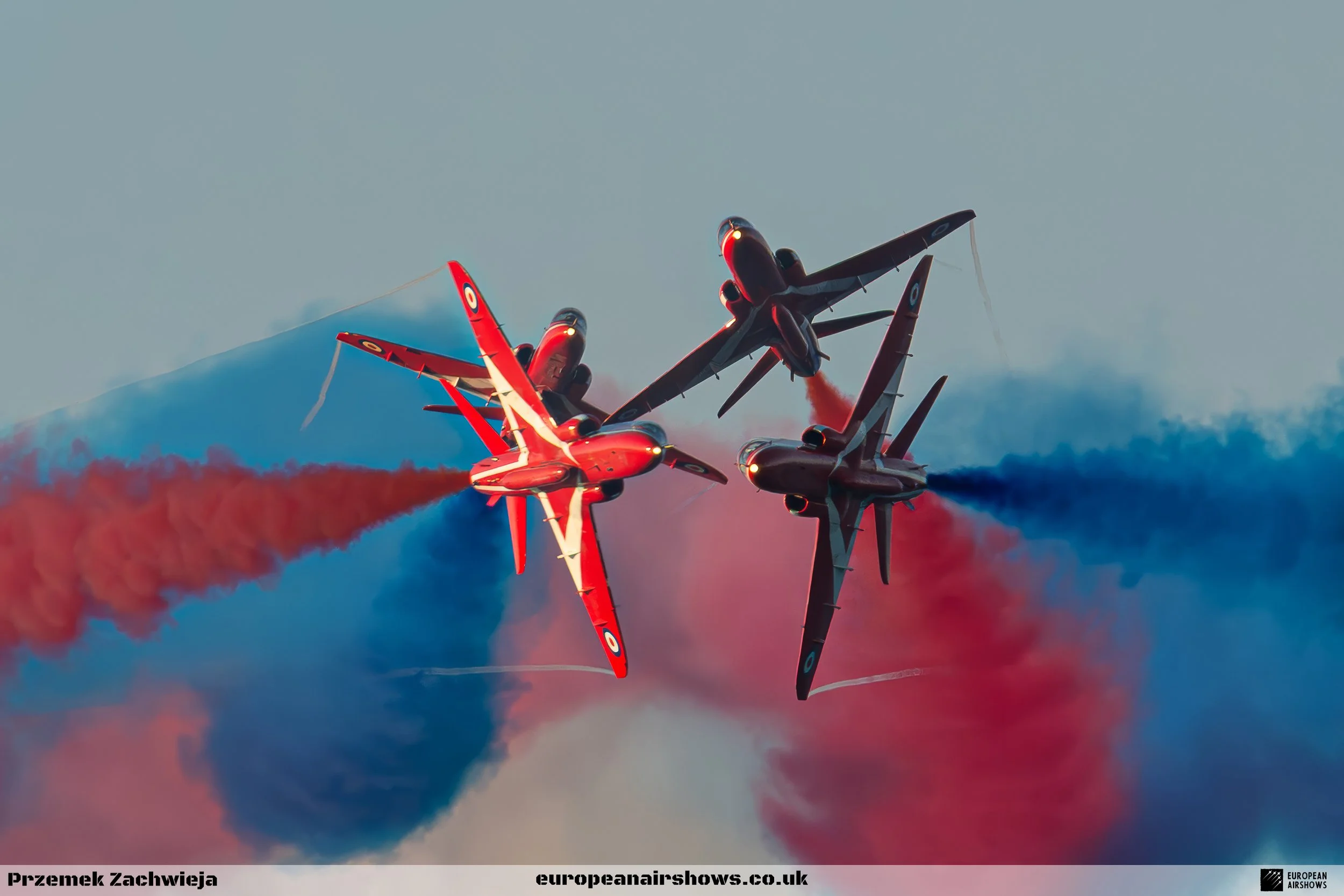
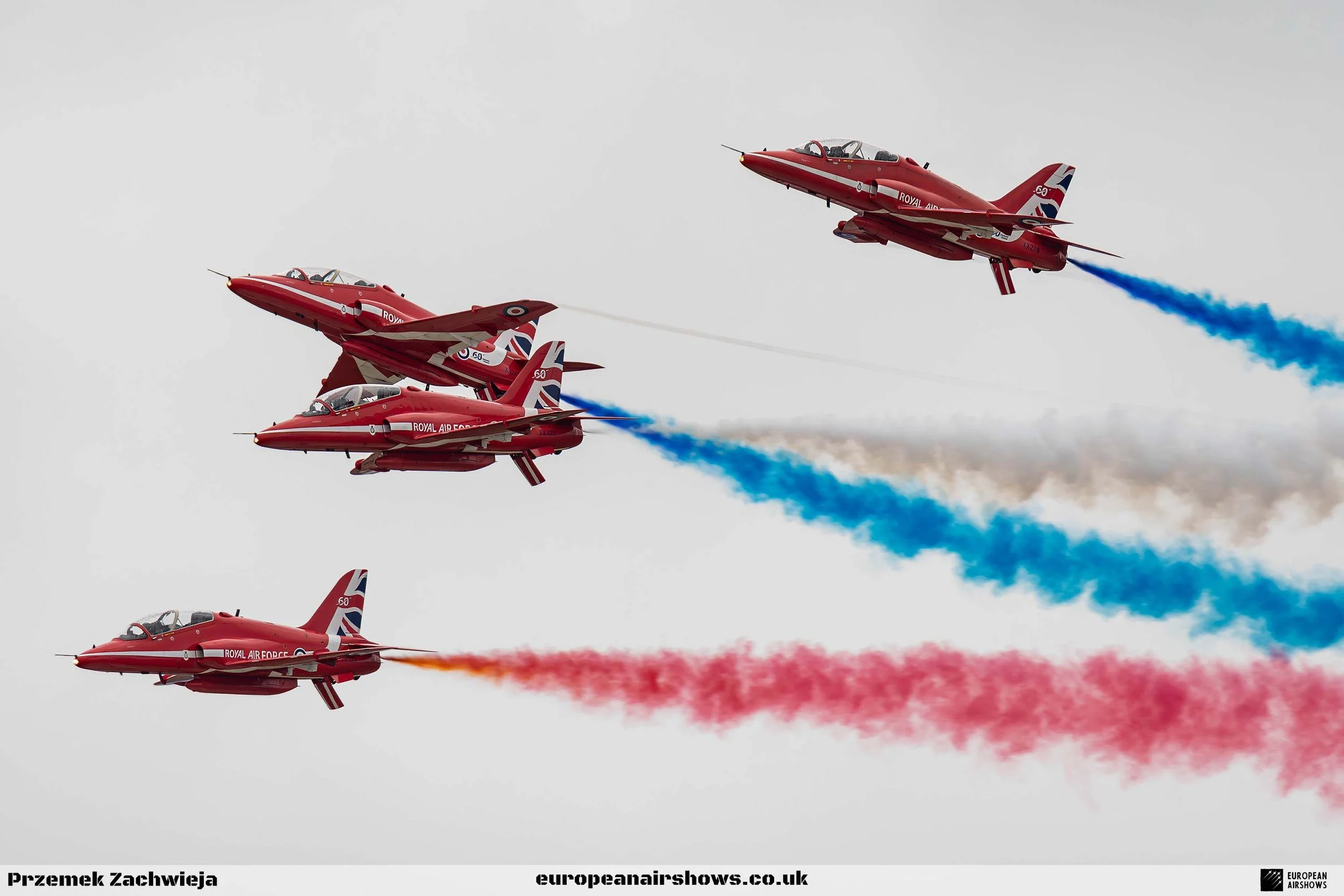
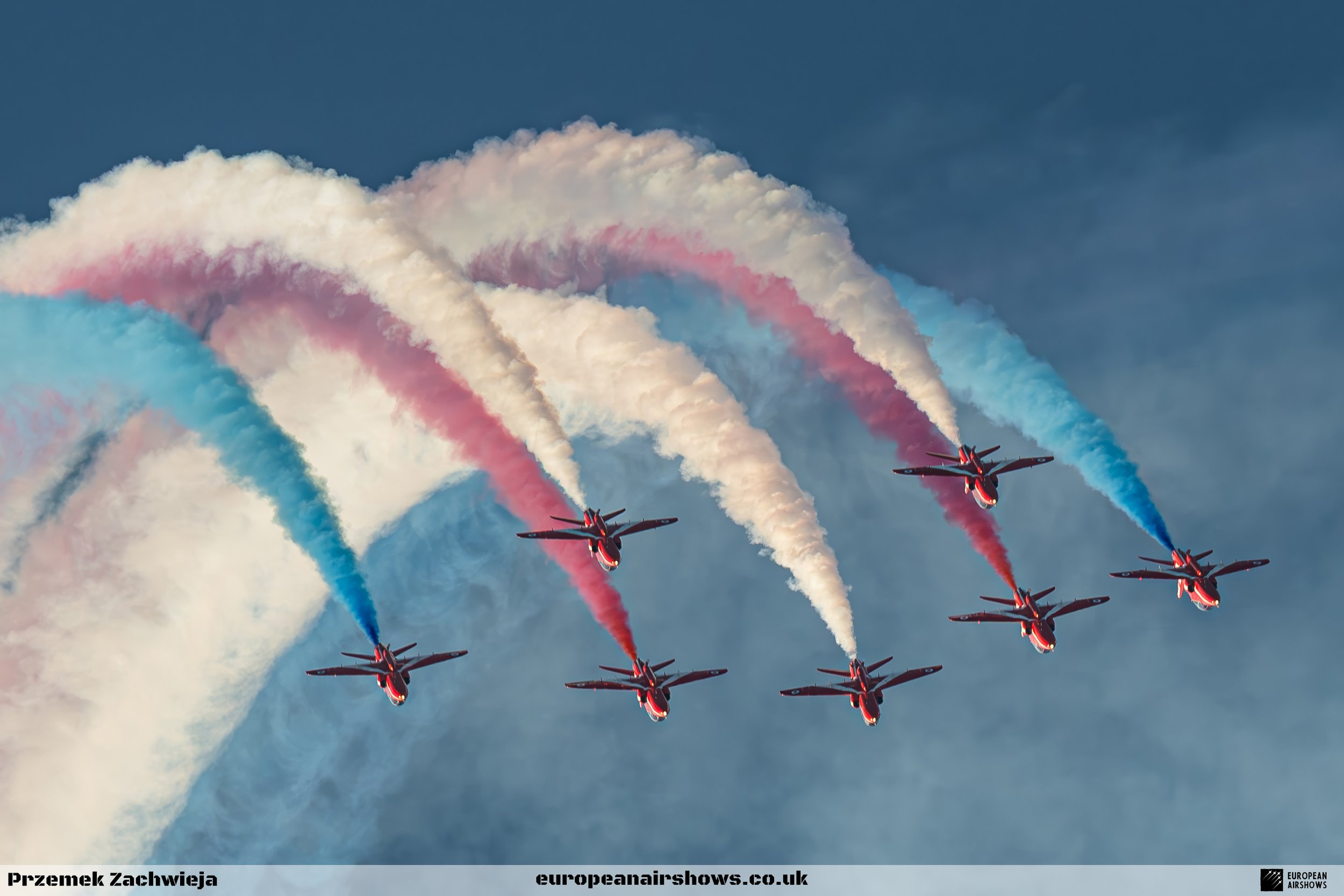
The RAF Red Arrows are expected to fly seven-aircraft aerobatic displays until the Hawk T1 is retired, with nine-aircraft formations reserved for selected ceremonial flypasts.
The change affects the team’s full aerobatic display, not every public appearance. The famous nine-aircraft formation is still expected for major flypast occasions, including HM The King’s Birthday Flypast and the 4 July commemorations in the United States, but the normal display routine will now be flown by seven aircraft.
For airshow crowds, the key point is simple. The Red Arrows’ display will be a seven-ship. The Diamond Nine is not expected to remain the team’s standard aerobatic display format during the Hawk T1’s final years.
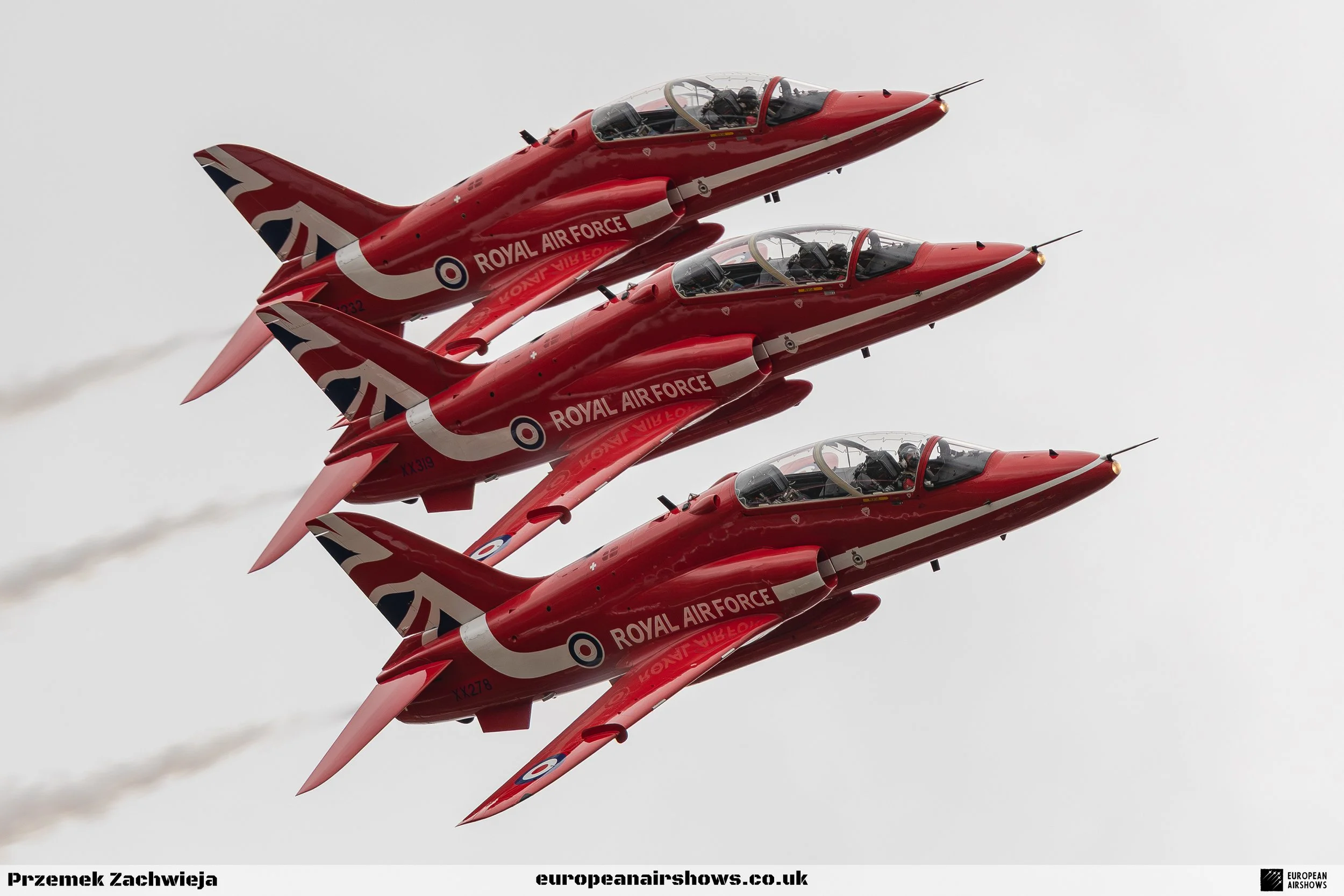
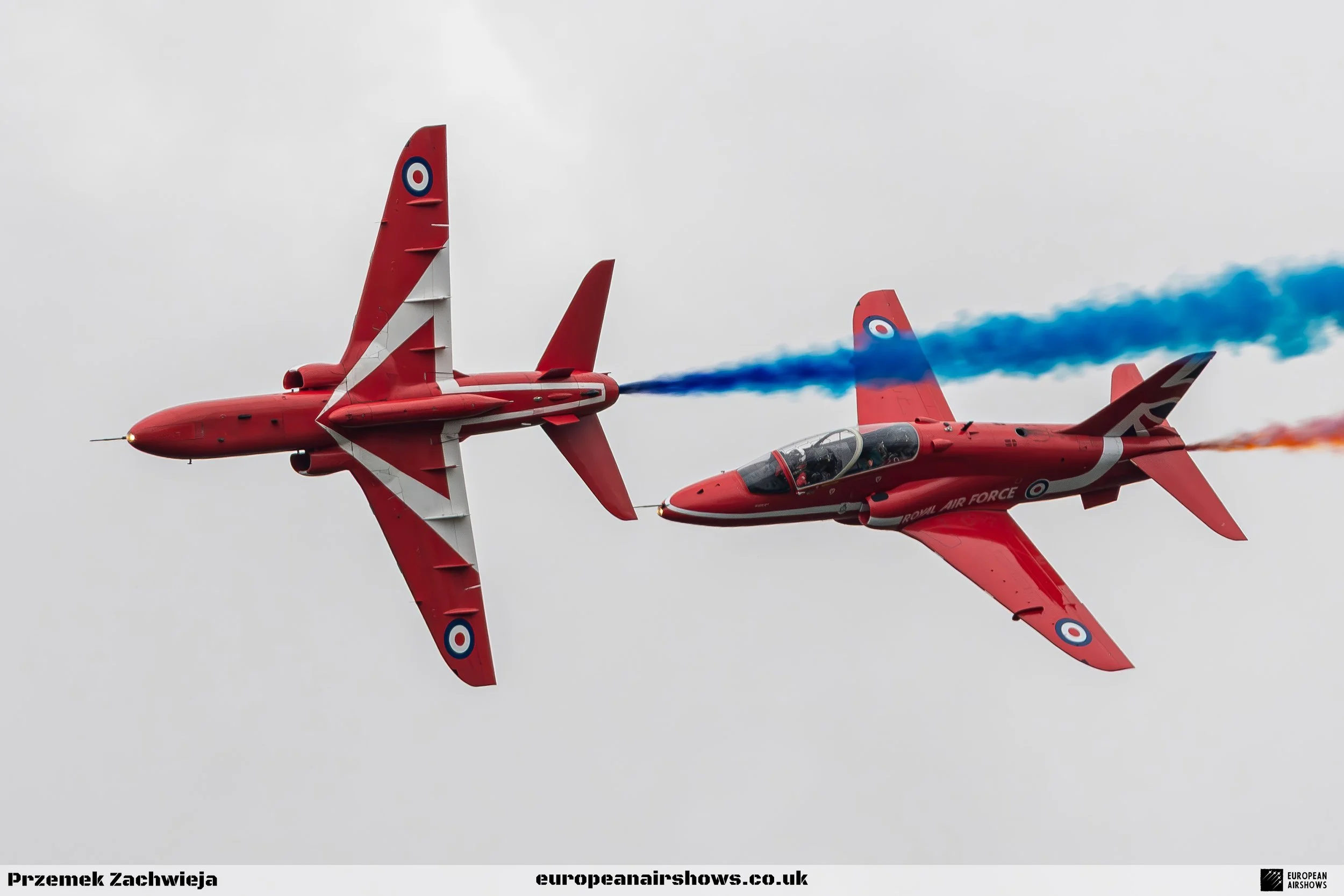
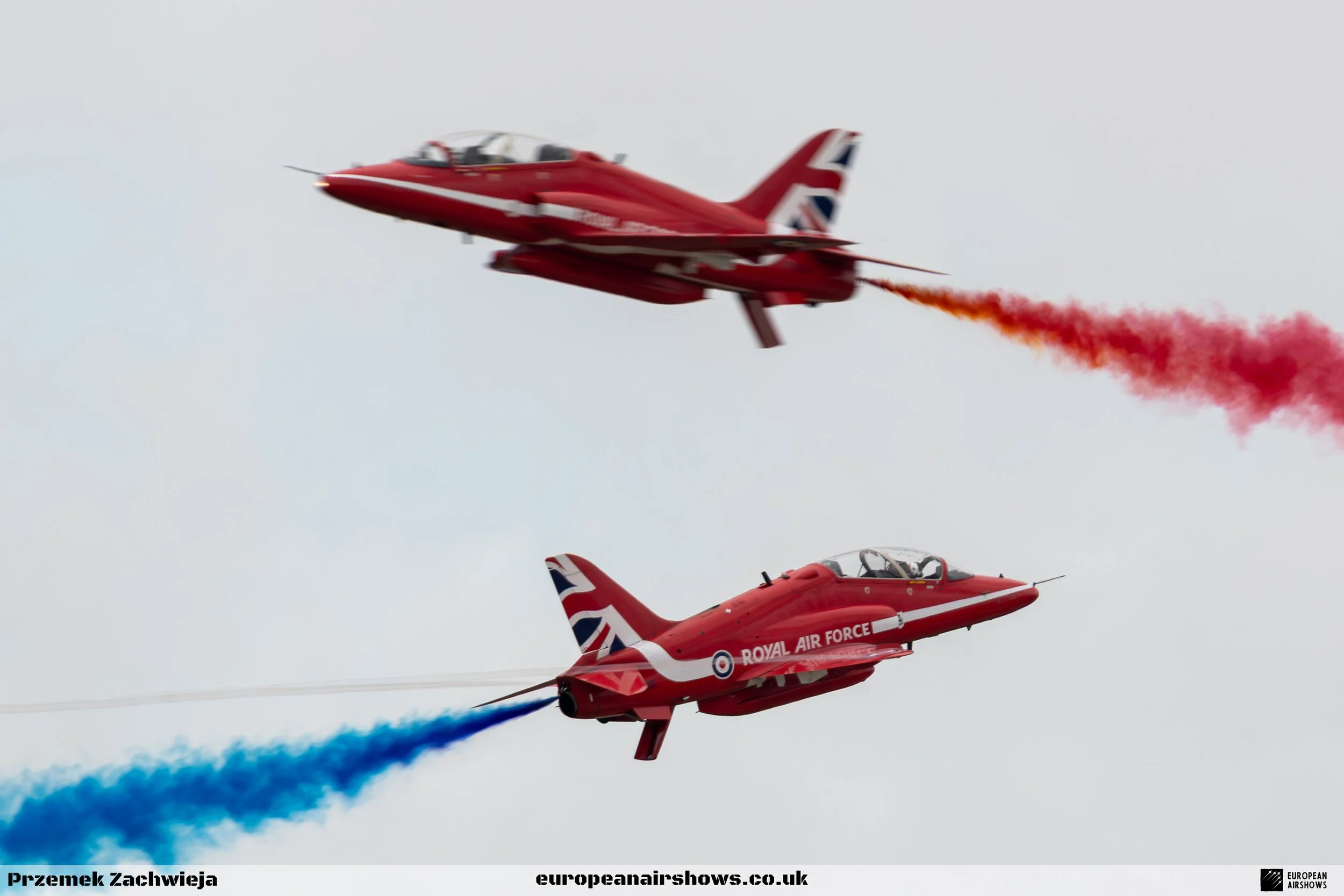
Red Arrows as a seven ship at RAF Cosford Airshow 2022
Engine pressure behind the decision
The change is linked to the age of the Hawk T1 fleet and the engines that power it.
The Red Arrows’ Hawk T1s use the Rolls-Royce Adour engine, and the aircraft type is now approaching the end of its service life with the team. The RAF says the Hawk T1 is expected to remain in Red Arrows service until the end of the 2029 display season.
UK reporting says the team is now rotating the use of its remaining engines to reduce pressure on the fleet, with the reduced formation expected to remain the norm until a replacement aircraft is bought.
The RAF said the move will support the sustainable management of the Hawk T1 fleet and help prepare the team for the transition to a future aircraft type.
Seven aircraft until 2030
This is not being presented as a one-season change.
The Red Arrows are expected to fly seven aircraft for most displays until 2030, when the Hawk T1 is due to be retired from the team’s service. The aircraft remains safe and active, but the decision shows how carefully the remaining fleet now has to be managed.
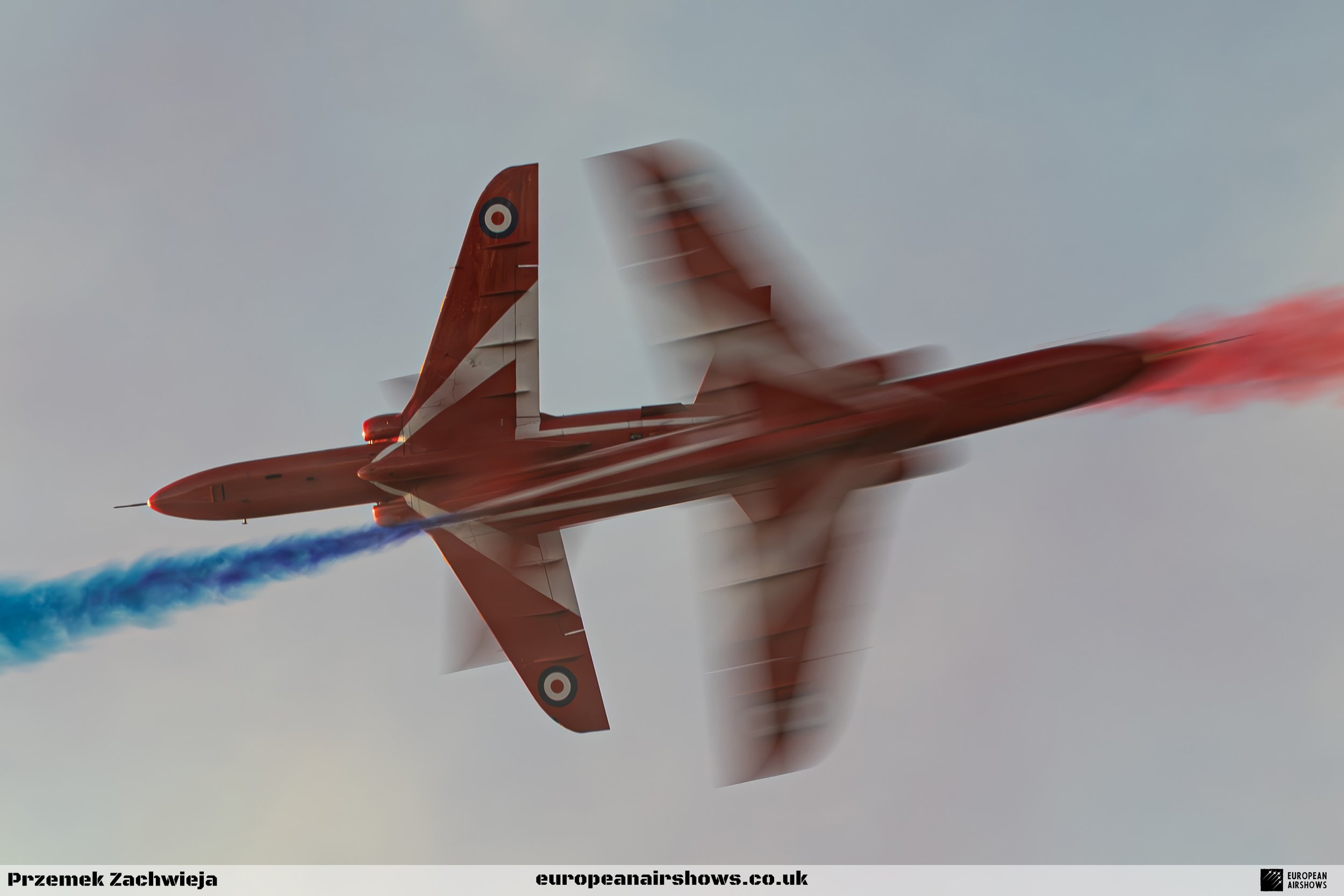
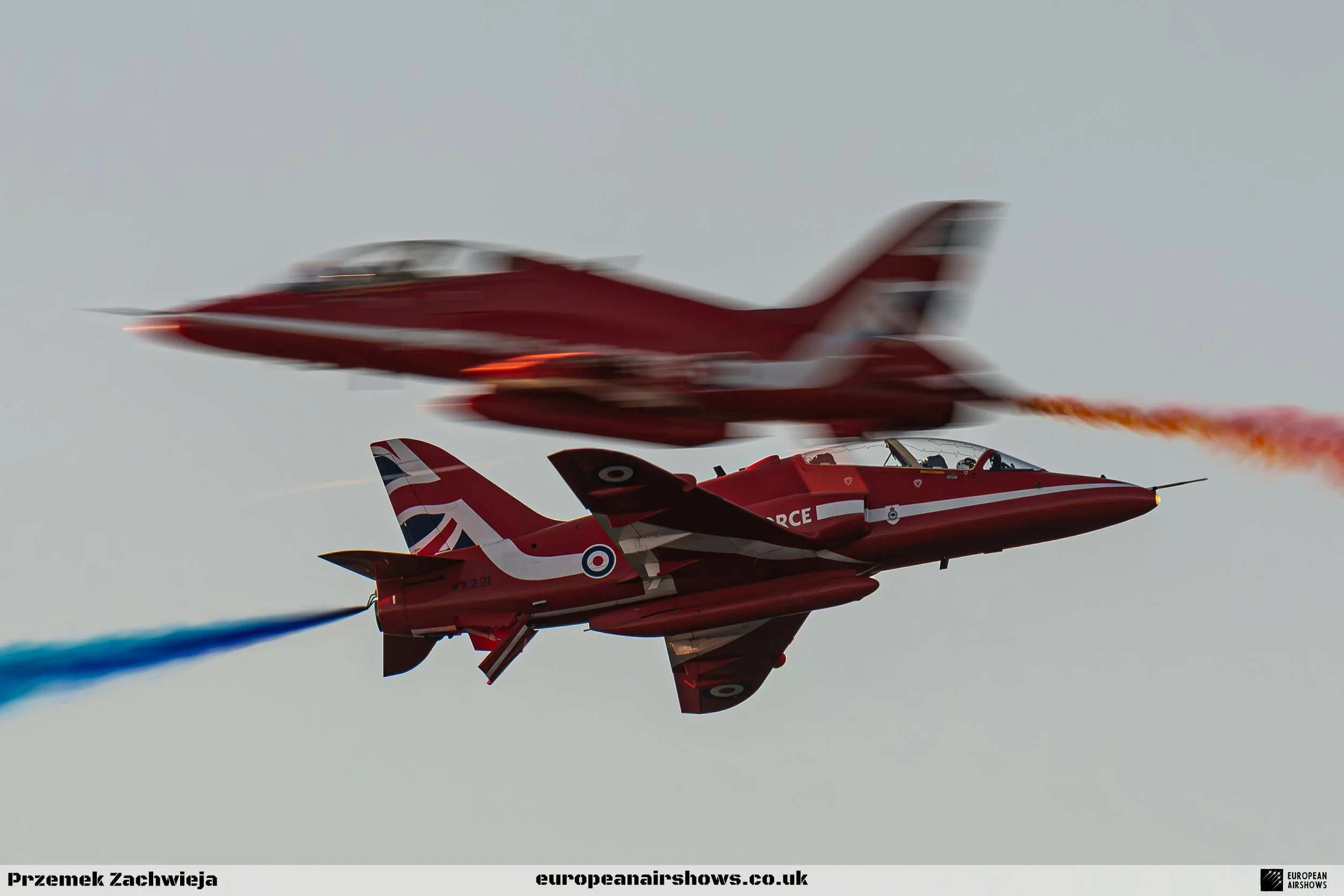
The Hawk T1 has been the Red Arrows’ aircraft since the 1980 display season, replacing the Folland Gnat. The team’s aircraft are based on the RAF’s advanced training version, with smoke-generation modifications and a slightly uprated engine for display flying.
The wider RAF Hawk T1 fleet has already been heavily reduced. The aircraft left wider RAF service in March 2022 when 100 Squadron retired the type, leaving the Red Arrows as the RAF’s sole remaining Hawk T1 operator.
Why it matters for the display
The Diamond Nine is one of the most recognisable shapes in British aviation, but a Red Arrows display is not built around one formation alone.
The team’s display normally includes formation aerobatics in the first half, followed by a more dynamic second half. The RAF’s own display information explains that Reds 1 to 5 form the front section, known as Enid, while the rear section has traditionally included Reds 6 to 9, known as Hanna. Reds 6 and 7 form the Synchro Pair.
A seven-ship display changes the shape and structure of the show, but it does not mean the Red Arrows are withdrawing from the season. The team remains active across the 2026 programme, with displays and flypasts listed across the UK, mainland Europe and the United States.
Reduced formations are not new
The Red Arrows have flown reduced formations before, although the reasons have varied.
In 2012, the team flew seven-aircraft aerobatic displays after Flt Lt Kirsty Stewart moved into a ground-based role following the deaths of two Red Arrows pilots during the previous season. The team later returned to a full nine-aircraft aerobatic display.
The team also displayed as a seven-ship in 2022, during a period of disruption within the squadron. That season was later reported in connection with wider misconduct allegations and internal problems within the team.
The 2026 change is different. This is a fleet-management decision linked to aircraft availability, engine life and the approach of the Hawk T1’s retirement.
Replacement decision still unresolved
The bigger question is what replaces the Hawk.
In Parliament in 2025, the Government said the Strategic Defence Review recommended replacing the Hawk T1 and Hawk T2 with a cost-effective advanced jet trainer. The future aircraft for the Royal Air Force Aerobatic Team is being considered as part of that wider programme.
The timing is tight. A replacement aircraft still has to be selected, introduced, supported and worked into a new Red Arrows display routine before the Hawk T1 leaves service.
One of the more visible British proposals, Aeralis, entered administration in May 2026. The company had been developing a modular light jet and had presented its aircraft as a possible future Hawk replacement, but it had not been selected as the Red Arrows’ next aircraft.
Other potential trainer options have been discussed publicly, including the Boeing-Saab T-7A Red Hawk, Leonardo M-346 and KAI T-50, but no final Red Arrows replacement has been announced.

US tour continues
The seven-ship display format comes as the Red Arrows prepare for Operation Eagle Hawk, their 2026 United States tour marking 250 years of American independence.
The RAF says the tour will combine aerobatic displays at established airshows with set-piece flypasts over major occasions. Listed events include appearances in Maryland, New York, Maine, Michigan and Wisconsin, with the team’s last United States tour having taken place in 2019.
The 4 July International Aerial Review over New York City is listed by the RAF as a flypast. That is one of the occasions where the nine-aircraft formation is expected, while the tour’s aerobatic displays are expected to follow the seven-ship format.
A different Red Arrows era
The Red Arrows are not going away, but the next few seasons will look different.
For aerobatic displays, the team is expected to fly as a seven-ship until the Hawk T1 is retired. For selected ceremonial flypasts, nine aircraft can still be used.
It marks the beginning of the final chapter for the Red Arrows’ Hawk T1 era. The aircraft has carried the team for more than four decades, but its final years are now being managed carefully while the RAF works towards a future display aircraft.
